Wednesday, April 25, 2012

Western Sahara: When Politics meets Renewable Energy


Crossroad of Politics and Renewable Energy in Morocco

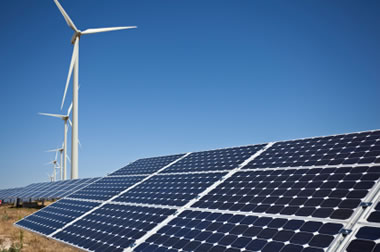
Why Morocco should invest in Solar Power is not a mere question of energy sufficiency but is a deep political statement those who are familiar with the Western Sahara conflict will grasp. Morocco in most of its geography is a sometimes rocky mountain plateau and other times plain fields in the North, while most of the South including the disputed Sahara is a vast desert stretching over kilometers and kilometers. With such a geographic blessing, not only wind power can flourish in the North, but half the country’s area can be covered with Solar panels.

This opportunity spotted by Japanese, Korean, European and US firms and well-studied, has dragged a staunch investment wave which reached its pic with the unveiling of one of the leading world investments in Energy: A multi-billion 12-square-kilometre Moroccan Renewable Energy complex.


With the help of leading Energy companies such as Desertec , and with the generous financing of the world Bank and the European Union among others, Morocco will become the leading Energy producer and exporter across the Mediterranean, calming the fears of the EU policy makers who projected doubts upon the Helios Project in Greece, a 10-GW photovoltaic project meant to assure EU provisioning with Energy.
Further readings:

Now, the question is: Where does politics come in the frame? And how can Morocco turn an Energy project into a Foreign Policy battle horse?

Those accustomed with the moving strings of diplomacy and foreign affairs will link Energy dependency and political alliance in this case, the same way we ought to do in the case of Iraq where Kurdish oil rich region and US Kurdish favoritism and support have a lot of in common!

Morocco, by allowing international investors pour their billions into colossal Solar Energy sites, not only benefits from infrastructure development and Energy sufficiency advance, but assures for itself a long lasting partnership with Europe and Western Key players both in the political and business world who will be keen in doing political favors for the kingdom when needed. Moroccan consent to host power generating projects aimed at supplying the EU with electricity must be sustained, and the common currencies for such tasks are finance and politics.

One would think that the Energy production process is constrained to turning sunlight into current, yet the most crucial phase extends beyond operating ovens and lighting bulbs with Moroccan electricity, it actually starts for Moroccan policy makers from turning precious Sahara sun light into electricity, then into money and political support.

This political support can be translated into a Western backing in the Western Sahara dossier, a controversial case where a non-self-governing territory is under Moroccan rule against international law and UN resolutions.

An easy way to confirm once and for ever the Moroccan rule over the Western Sahara doesn’t need political assiduity or Foreign policy brilliance. By investing into solar panel fields in the Western Sahara through its local Renewable Energy branches, Morocco would not only escape UN, EU and US restrictions on companies from investing in a disputed territory as well as being the main stake holder in the projects, increasing thus the profit, but would also put the World in front of the “Fait Accompli”. Energy dependency overcomes political and ethical considerations, and so the EU won’t have much of a choice but to import Electricity from Morocco, energy produced in a territory the EU doesn’t recognize Moroccan sovereignty over. This business partnership would have a deep political meaning: We recognize Moroccan control over Western Sahara since we buy goods produced there…As easy as that!

Putting ourselves in the shoes of EU policy makers will give us a clear understanding of the situation:
“Ok, so we’re running out of oil and the prices of fuel are skyrocketing in a time where our economies are shaking. We can import electricity from Morocco with a low price since we are major investors in the country’s Renewable Energy projects and we can lower the prices even more though political support and diplomatic backup of the kingdom, but that would mean importing goods produced using resources of a disputed if not occupied territory, thus breaching international law and recognizing Moroccan sovereignty over the WS … Hmmm, I guess hell with international law and ethics, we have an economy to feed and citizens to satisfy, the interests of the EU citizen come first”

Not only would being addicted to Moroccan Renewable Energy supply lay the foundations for political partnerships, but can also set the place for military and security strategic alliance as Energy output in the Power plants is directly linked to social stability and security. The EU would be prone in making sure these plants are operating full time, and if necessary as in the past years where the Western Sahara has witnesses strong clashes and protests by Polisario supporters, disrupting commerce and businesses (Polisario is the Liberation front adopted by the Sahrawis as representative and political body charged of Sahrawi affairs and struggle), would be ready to support the Moroccan government in pacifying the region with appropriate anti-protests weapons and equivalent silence over Human Rights abuses and over use of power with the local “dissidents”. (History taught us about how much can be deployed by states in order to secure resources and industries such as heavy military protection of pipelines or the Gulf war among others)

In conclusion, investments are far more powerful than simple financial tools for economy leverage. Investments can prove to be strategic political cards if placed and set in the right place, and foreign policy sometimes is better served by businessmen and corporations than by cultivated diplomats. 

Mohamed Amine Belarbi

Sunday, April 15, 2012

La faillite de la diplomatie Marocaine

Comme il est bien longtemps que je me suis mis au Français, voici un bref article sur l'incident qui a enragé Rabat et a fait la une des journaux tant Marocains qu'Algériens!

Retraite diplomatique comme toujours!

La faillite de la diplomatie nationale se fait entendre encore une fois, avec la résonnante nouvelle dont les médias furent inondés de la délégation Marocaine et des figures politiques du pays pliant bagage lors des funérailles de Ben Bella, le premier président Algérien qui a laissé derrière lui un énorme lègue pour l'Algérie et la région Maghrébine de ce fait.
La photo, reproduise ci-dessous, révèle le motif derrière la décision de la délégation Marocaine de boycotter l'enterrement et de repartir sur ses pas avant la fin des funérailles, avec le Premier Ministre Marocain Benkirane en tête:


La présence des représentants du Polisario et de leur président Mohamed Abdelaziz! Cette excuse ou affront accordement aux autorités marocaines n'est pas un scoop, mais plutôt une image récurrente qui confrontera les deux ennemis jurés plus d'une fois, que ce soit dans des sommets internationaux ou conférences intellectuelles, tout on n'oubliant pas les regroupements estudiantins qui se terminent par une vive débâcle entre les deux partis, arrivant aux poings assez souvent.

Ceci en dit long sur la faiblesse des autorités aux plans politiques et diplomatiques, car éviter son antagoniste et se retirer des réunions et sommets en leur présence signale une profonde conviction d'auto-incapacité à prouver son point de vue et légitimer sa position par les outils conventionnels de l'argumentation et du débat intellectuel.

« Devant une telle situation, la délégation marocaine s'est immédiatement retirée, avant de regagner l'aéroport d'Alger où elle a été saluée comme à son arrivée par le Premier ministre algérien, Ahmed Ouyahia. » L’agence officielle marocaine MAP


Se retirer constamment, comme on le fait depuis belle lurette, a non seulement des conséquences politiques, économiques et diplomatiques due à notre absence de forums majeurs tel l'Union Africaine ou autres organisations reconnaissant le Polisario, mais aussi un profond impact psychologique dans la conscience humaine, locale soit elle ou internationale. Le manque de confiance que le peuple ou les diplomates et politiciens du globe ont expressément signalé à la diplomatie n'est pas réconfortant pour le lobby diplomatique, tant il diminue sa crédibilité et la pression potentielle que peuvent exercer les autorités dans les corridors des nations Unis ou des instances africaines et latino-américaines.

Continuer à poursuivre une politique d'absence et de retraites des sommets internationaux et évènement régionaux à chaque fois que le Polisario est présent ne gagne au Maroc guère une bataille psychologique ou morale, mais contribue à effacer la compétence Marocaine au service du renforcement de la présence du Polisario dans la scène internationale.

Cette même politique non-diplomatique  de retraite, couplée aux performances diplomatiques ridicules du roi Mohamed 6 dont l'apparition aux sommets internationaux est quasi inexistante, ampute au Maroc un organe nécessaire et cruciale pour protéger et avancer ses profits et bénéfices stratégiques tant politiques que financiers, laissant la politique étrangère de la nation la risée de la région, du continent et du globe face aux mastodontes diplomatiques pas trop loin qui s'affairent à sculpter une influence sans réciproque, à commencer par le Qatar.

L'hilarant dans toute l'histoire est que la diplomatie étrangère du Maroc n'est non pas seulement incompétente, mais qu'elle est douée d'un sens d'hypocrisie sans précédent! Ceux-là même qui dénoncent la présence du Polisario aux instances internationales et boycottent de ce fait les hauts sommets politiques, sont les même qui négocient avec les diplomates du SADR à Manhasset, et sont les mêmes qui prennent leur siège aux Nations Unis qui, rappelant-le, ne reconnait pas la souveraineté du Maroc sur le Sahara Occidental comme tous les pays du monde sauf bien sûr le Maroc lui même...Pourquoi donc ne pas boycotter les Nations Unis, les états Unis, l'Union Européenne et tout le tralala, car tous dénoncent la présence du Maroc au Sahara Occidental...Et tan qu'on y est, pourquoi ne pas dissoudre ce ministère des affaires étrangères tant il est devenu non nécessaire?


Le fait que la délégation marocaine ai interrompu sa participation funéraire en Algérie dénote d'un profond sentiment de dégoût que nos autorités Marocaines et Algériennes ont cultivés là où ils ont grandi une immense servitude et servilité au maître blanc, aux autorités coloniales qui garde nos gouvernements et structures politiques enchaînés à un passé impérialiste où les frères maghrébins d’antan ont été éduqué sous l'auspice de la France à devenir ennemis, rudoyant et médisant les uns les autres, jusqu'au bout de manquer aux règles de bienséance et aux bonnes meurs les funérailles nécessitent des membres présents.

Mohamed Amine Belarbi

Wednesday, April 11, 2012

New energy sectors for a New World Order

This article is brought as part of my collaboration with the NRG Battle World Edition
To know more visit: http://www.nrgbattle.com/about/

New energy sectors for a New World Order

Energy has long been in the heart of discussions spanning from the corridors in the white house to the modest coffee shops whose owners curse day and night the recurrent cuts in electrical supply during the height of the classic game played in front of a vast crowd of customers. Yet the actual turning point in the energy revolution started a couple of years ago when serious leaps forward were made to bring these talks to life and implement what has long been kept in archives and technical plans. What made this green revolution in the last decade spur and offshoot in the world affairs is not an ethical or considerate incentive towards mother Earth and the future generations, but rather a profit and benefit driven agenda which amounted to the most critical items in the national security concerns. These incentives, which I will try to explore and shed light on, are not any new emerging factors, but are incentives know to societies and governments since the early Babylon and the paranoid empires which made our history class much more enjoyable!

Political stability and Economic Prosperity

The first and foremost concern of any standing government and existing society is political and social stability. A state of fear and disturbance is ultimately a noxious land which prevents the establishment of any prosperous life and the sustainability of daily activities. Yet the social and political chess game of a certain nation cannot only be devastated by a victorious chess mate climbing on the top of tanks and fighter jets, but also can be overruled by economic and financial warfare. These are nothing shocking as economic embargos and thus energy prompted shortages have been used since Medieval blockades on castles and then upgraded to much more efficient mechanisms used against non-complying actors in the world scene (Economic embargo on Iran and Iraq which targeted mainly energy sectors through restrictions on oil industry).

Thursday, April 5, 2012

NRG Battle World Edition here we come!


As I will be blogging for the NRG Battle World Edition taking place in Kuala Lumpur from the 4th of June to the 8th, I will be sharing some of my posts in my Blog so that a wider audience accesses them.
For more info on the event, check: http://www.nrgbattle.com/


The NRG Battle World Edition, as described by its organisors:


"NRG Battle – World edition

The NRG Battle – World Edition is a competition organized during the World Gas Conference in Kuala Lumpur where 100 global top talents work, for four days in multidisciplinary teams of five, on challenging cases provided by companies. At the end of the four days, each team presents their idea in a 3-minute pitch to an expert jury, consisting of CEO’s and Directors from the energy sector. The jury nominates three teams that will pitch their idea once more to 5000 delegates at the World Gas Conference, who will then choose the winner of the NRG Battle - World edition. 

Top Talents

Companies are constantly looking for talents, one of the main reasons why companies participate in the NRG Battle is to find and recruit new top talent. Therefore this is your chance to get in touch with these companies and present yourself. What better start can you imagine!?
Since 2009 we have successfully organized the NRG Battle – Europe Edition each year, over 1000 participants and 53 nationalities have joined the battle so far.  We recruit students from the bestuniversities all over the world through ambassadors, these are participants from previous years who act as ambassadors (promoters) for the NRG Battle and promote the battle in their country. In addition, a global promotion campaign via Internet and social media is launched in order to attract new top talent for the NRG Battle – World Edition.
Students who sign up for the NRG Battle – World Edition enter an online Global Talent Pool. Only participating companies have access to this pool, they will select their teams based on the talents they need for the case. That is why you will take a personality test (Big Five), we can test what added value you have for companies. The big five personality test shows the five broad domains or dimensions of personality that are used to describe human personality.

Multidisciplinary Teams

Twenty teams will meet, compete and innovate during the NRG Battle at the World Gas Conference in Kuala Lumpur. Every team consists out of five talents that will be selected by the companies according to their needs and skills for solving the case. During the battle each team is allowed to use whatever they feel like is necessary to win the battle. Be creative!
At the World Conference twitter can be used to find experts that can help you to crack your case! There will also be case instructors of the companies to help you."


This being said, follows a quick and short introductory post before I tackle this new task which, hopefully, will keep me busy for the next couple of weeks!

Thursday, March 8, 2012

KONY 2012: When institutionalizing an idea leads to its demise


KONY 2012: When institutionalizing an idea leads to its demise


When you get your Facebook and email flooded with the KONY2012 videos and articles, you realize shit has just got serious. Massive posts and sharing of the KONY2012 short documentary has indeed stirred countless responses, mostly favorable, yet a frantic minority has been calling out for a conspiracy.

Follows the video widely widespread on the net and massively shared on Facebook:

The message is clear, concise and appealing, making full use of the influence and persuasion technics of any media campaign. Yet, any propaganda opts for the same mechanisms of propagation and massive distribution, making more than one raise an eyebrow as to what are the real incentives behind the KONY2012 organizational and promotional group.

Why questioning? Well, the numbers speak for themselves! Millions of dollars channeled throughout the globe through donations and purchases of different solidarity kits and gadgets, ranging from bracelets, to shirts and posters.  These millions of dollars are fueling the efforts which made the KONY2012 such a successful social media offensive, yet the virtual nature of the campaigns main feature brings to the spotlight several critics concerning the budget allocation and spending.

I will quote here the website http://visiblechildren.tumblr.com/:

Last year, the organization spent $8,676,614. Only 32% went to direct services (page 6), with much of the rest going to staff salaries, travel and transport, and film production. This is far from ideal for an issue which arguably needs action and aid, not awareness, and Charity Navigator rates their accountability 2/4 stars because they lack an external audit committee. But it goes way deeper than that.

The budgetary management is far from being a regulated financial source and the lack of transparency and audit further advances the theory of mal practice and financial frauds.

Yet, financial opacity is not the key concern raised about the KONY2012 campaign. The political implications are far outweighing any financial considerations indeed. A US military intervention, be it through logistical support, military advisory personnel or through actual ground intervention with American troops, stirs enormous concerns on the incentive behind a military participation and the potential implications of such acts on the US interests.


The Political profile of the supporters of the KONY2012 campaign inside the corridors of the congress can easily be drawn. The video displays the 12 political figures the campaign intends to motivate towards a military intervention, and not surprisingly, the republicans are at the forefront of the little congress battalion ready to fight for a humanitarian intervention, as they did in Iraq and elsewhere.

Saturday, February 25, 2012

Did IAM step back?


After the last media campaign which stirred countless responses over the VoIP problems apparently initiated by the telecommunication firm IAM, and the many blog posts, tweets, articles and letters from Skype, Viber and other software using the VoIP feature, the calm may have come back to the Internet community after many users reported an increase in Skype calls quality.


The speculations flying around assert that IAM may have pulled off and let the VoIP services re-operate fully without interference as a mean to cool down the public discontent which already shattered the companies reputation.

Some go as far as referring to a potential process of installing spying devices by IAM to control and monitor the information flow, cause of the potential interference with the VoIP feature... everything is plausibe!

While we are waiting for some of the technicians inside the company's corridors to leak a confirmation or a denial of the backing off from the usage of the newly deployed Cisco hardware, we can only speculate on a probable victory of the internet community to get the firm on its knee, asserting furthermore the immense power of the internet users in influencing policy making and companies behavior.

We hope to hear back from more people on the re-establishment of the good quality calls in Skype and other software using the VoIP feature, and until then, I will keep you updated on the news and development concerning the matter.

Mohamed Amine Belarbi

Thursday, February 23, 2012

Occupy IAM!


A lot of tumult has been raised concerning the outraging initiative Itisalat Al Maghrib, the leading telecomunication company, undertook in the last period.
The provider of internet decided to cut the VoIP services and thus thousands if not million of Moroccans are unable to use softwares using this service such as Skype and others.

Steming from a protectionist policy meant to safeguard the earnings of the company against any competition, IAM has shown a coward attitude towards its consumers and towards the worlwide softwares using the VoIP technology, and thus lost respect and allegiance from a wide array of local consumers ranging from the old grandma who used to talk to her grandson in Europe, to the businessman holding his meeting through Skype conferences with international partners, passing by the usual student who needs to pass a Skype interview with the admission offices of the US universities.

What makes the problem doomed to persist is the probable interference of the government in such matters, knowing that our lovely intelligence officers have a hard time tracking and monitoring our conversations which bypass the conventional phone lines.
The intelligence networks spread out accross the country have all to win from such measures prompted by IAM, and the lack of a governmental initiative to tackle the problem and restaure the citizen's right to enjoy the internet services wouldn't come with much surprise.

Whether it is to blame on IAM or on the old grumpy intelligence officers, the necessity to act is more than pressing in a society where the citizen strives to show that he is aware of his rights and is ready to fight for them.

Let us boycott IAM, shame it publicly through a staunch media campaign against it, and let us write petitions to Skype and other companies using the VoIP services prompting them to remind the government of its responsibility to assure a free internet where no company nor government can interefere and imped the rights of its users.

Let us Occupy IAM offices around Morocco!

Follows a video post concerning the matter:


IAM response: Deny everything as expected!
Viber Response to the consumer complaints about the VoIP problem: Source: 


Mohamed Amine Belarbi

Wednesday, December 28, 2011

The New Gulf Vision for International Education

An NYUAD future undergrad insight 


On the request of a friend, I'll be writing this post on a subject loosely related to politics, specifically on the New York University of Abu Dhabi, with a modest approach to the Gulf politics, just so to keep the writing line of the blog present...

It is quite unique to observe a new trend in Education, sourcing in the Gulf countries, namely Qatar and the UAE... students around the world have noticed the fierce advertising of a new "kind" of Universities who, strange enough, bear US brands while being located in the middle of the oily arabian deserts.
Quite an explosive cocktail one would say, especially that the Middle East was never recognized for being the harbor of US Universities with great caliber. (Some even still think of the Middle East as an empty desert populated by bedouins...)


After the invasion with tanks, Fighter jets and ground troops, the Arabian peninsula is now living the era of intellectual incursion, and incursion one would argue which benefits the locals more than it offers a fruitful ground for brainwashing and Westrn conditionning for propsective Arab leaders.

As I am heading to the New York University of Abu Dhabi to be part of the 2016 class, I believe an insight on the new educational fashion promoted by the wealthy Emirates from my part would be highly appreciated, as some of my countreparts evoked.

The first impression that most of us would have is the stereotype of the wealthy fat sheiks and how a University planted in the Gulf would ultimately enjoy the many financial benefits of the area...and indeed it turns out to be true!
The logistics, infrastructure and budget of the US Universities out there, or at leat the ones I know (NYUAD and Georgetown University in Qatar) are virtually limitless! Ranging from Luxurious dorms to 3D TVs, passing by scholarship packages which include countless benefits and Filipino servants clearing your plates, this new Gulf/US branded universities have the primary weapon to drag the brightest students who are more than willing to study for free and get pocket money over it.

Another prominent feature of these Gulf branches of imminent US Universities is the outstanding faculty they manage to gather in their campus corridors. Draging top professors from Yale, Harvard, Oxford and numerous prestigious institutions, the head hunters don't go easy in selecting a stunning panel of teachers to make the University stand out internationnally, with of course fat paycheques being thrown left and right.
More impressive, the University I am attending in a couple of months welcomes the NYU president John Sexton bi-weekly so that he can teach his famous course (Government and Religion) to both the NYUAD students and an Emirati selected group, raising concerns about the costs of such journeys without mentionning the fury it starts among the environementalists who would get pissed off when it comes to the presidents' carbon footprint...


From personal experience, I can totally confirm the luxury these Universities afford to their students, especially after a journey I undertook to Abu Dhabi as part of a candidate weekend (part of the selection process).
Bringing 70 students from around the world to the UAE and bearing all the costs of travel, stay in a luxury hotel with on the top fancy activities in the desert and in the 7 stars hotel Emirates Palace(fancy dinner in Emirates Palace. pic down), this is what one would call hardcore advertisement!


And indeed it is one of the most powerful tools to expand the influence of the University, making the students go crazy over how fancy the trip to AD was and spread the word about the institution among their fellow coyears...(Bear in mind that not all the students got admitted at the end, though they were brought from the end of the globe to take part in sample courses and undertake a campus tour among others...)

It is indeed impressive that the Arab Gulf countries are heading in this new educational road where new perspectives and revolutionary vision are being drawn alongside the tall skycrapers which burst in the deserts of Arabia!
John Sexton  didn't spare words when describing the vision he sees taking place in NYUAD, a vision which reflected the eagerness of the UAE to take over the global leadership in the domains of Education, Business and Technology.


The UAE is a country which is still building and shaping itself, and the efforts of nation-building undergone in the oil rich emirates are to be met with an equivalent effort by the international community in order to foster peace and prosperity in times where wars are waged, ignorance is spread and hunger is a valuable currency in world marketing.

Coupled with the limitless financial capabilities made possible by the oil revenues, the new world vision taking place in the Gulf is to be taken on serious grounds, especially that the economic uncertainties in the West and the shifting of geopolitical centers to the East makes the emergence of centers of power in the Gulf a certain outcome. A clear display of such ground breaking changes is the shining of the star of Qatar in the last Arab Uprising where the tiny country unblocked huge funding ans tactical moves which threw it on the front line of those benefiting from the advantages of regime removals.


From organized protests in Qatari studios to political and logistical support to rebels, without forgetting the highly trained media staff which organized the unfolding of the revolutions in Aljazeera corridors, Qatar has shown that the determination of the Gulf countries to enclench its fist and grab the torch of leadership is not an ephemer fantasy, but a true vision for a New World Order where the rules of the global gameplay are drawn differently.

Heavy International investments are no more than a small fraction of what the Gulf has to offer, yet, the era of subordination and passive politics is now gone. Turning from the receiver to the active player, the Sheiks of Arabia have learned the lesson and are ready to make drastic changes (relatively ;) in order to channel the power of oil into palpable holdings in politics, business and education.


The conventional is not welcome in the Gulf of the 21st century, and so is the idea behind hosting US campuses while boosting their capabilities to make them outsmart their mother institutions back home. Give them money, give them logistics, give them buildings, internships, stunning faculty, countless research opportunities, study abroad programs, trips, conferences, evenings with top world personalities, luxury in its most mindblowing forms, and collect the results!

It is still an experimental process which found many supporters and critics, yet the fact that there is a genuine willingness to move the Gulf forward and make it a new hub for intellectual, political and economic leaps brings hope and faith in the Middle East as a whole, especially that it doesn't lack capabilities to bring real change to the ground, provided the West allows such re-emergence and sees it as a collaborative advance rather than a potential threat to the US and EU predominance in the global scene.

Mohamed Amine Belarbi

Wednesday, November 30, 2011

Europe: What future in the light of the crisis? (1/2)


Europe as meant to be


Europe has been struggling for centuries to come up with a unifying trend which could gather all Europeans around common values and ideals. Be it through wars, diplomatic approaches or economic alliances, Europe is still thriving with a single goal in vision: A unified Europe for a true European citizen. This approach didn’t encompass only the European geographic and demographic extension but expanded itself into a universal idea of union and prosperity which would serve the humanity as a whole.

The geographic expansion of Europe towards Eastern European nations has proven not only the success of the European unity which appealed even to former soviet countries, but also displayed to the international community that even though different as we are, we are still sharing a lot in common, and the basics of the European principals proved to cover these common ideals we are looking up for.


But what are these European values and what makes them so unique? A quick glance at the many aspects on which lies the European union will reveal these ideals on a practical basis and not only as a set of theoretical and utopian precepts.

Good governance

What set apart the West and the European Union in general from the rest of the world are the good governance and the intelligent affair’s administration. Europe now is one if not the most democratic political body which sets the standards to follow for the rest of the world. This achievement should be regarded not as a regional achievement but as a multicultural and global movement’s success in bringing politically, socially, economic and demographically different nations to agree to a set of regulations and policies which take into account the respect for the national sovereignty of the member states while at the same time building a comprehensive network which knits a unified European strategy for the whole members community.


As an article in the guardian expressed the concerns over the divers body forming the European Union and the threat of such diaspora to the unification efforts:

“…the union now contains countries that are geographically distant from one another, and which have experienced very different histories. To some extent geography determines interests. Historical experience also shapes perceptions of national self-interest. Thus in a broader union it may become harder for the member-states forge common policies and approaches.”[1]

Cultural understanding

It is in indeed amazing how the cultural values Europe stands for shaped the mutual understanding which allows so diverse communities and nations to live side by side in a tightly knit union. In a world which is torn apart by the many differences our religions, cultures, social mixture and political systems experience, the struggle for global peace and understanding is becoming more pressing than ever. But looking at the successful integrative policy Europe led throughout the past, we can easily notice how well the immigrants, Romas, Gipsies, Muslims, Africans and Asians managed to coexist in total respect and consideration. The providing of institutions, political and social bodies as well as comprehensive policies is an example of how the bridges of understanding can be built if the political wiliness is present.  

International peace promotion

Not only the European values and ideals are meant for local consumption, they are also a product exported all over the world which tries to give others the taste of global success and peace Europe world hard to implement. The many events where European intervention proved to be crucial in order to draw the world attention to conflicts, suffering and oppression attest of the significant place humanitarian efforts are granted in Europe’s foreign policy. A successful nation or Union cannot be judged solely on its internal achievements, but should be taken accountable for a greater role outside geographic borders. Europe proved to be an active fighter and promoter of international peace and global well-being, and this genuine interest in the world rather than the selfish self-centered policy several political entities promote reveals much about the nature and essence of European values which are truly universal ideals.

Economic prosperity

Another striking power of the European values is the way the economic prosperity is fostered through caring mechanisms which allow a certain financial flourishing of businesses and individual richness. Creating a common market and allowing the flow of goods and merchandises freely in the European geographic spot not only served as a driving force for the Economic financial status, but rooted the principles of joint cooperation and mutual help in order to boost peace and unity through economic cooperation. As one of the major pillars for self-satisfaction, economic needs of the European are tightly observed and secured, as a mean to fight the social diseases which find their roots in poverty and social disadvantage.

 These aforementioned values –which are the same values I see as indispensable for well-being and prosperity-, are to be considered in whatever endeavor started and which tries to promote and incorporate a productive union which works equally on the financial prosperity as on the immaterial flourishing of societies. Peace promotion, cultural understanding, economic prosperity, social care and the sense of global citizenship are true core values of the European well-being system, values which are to be secured and protected for a better Europe and a better world.

Sunday, October 9, 2011

What future for the polisario in light of the Arab Uprising?


Polisario : Victim of its own alliances

The future of the Front Polisario has been brought again on agenda after the Arab springs’ impact on the geopolitics and foreign policies of the North African and Middle Eastern states. The recent fall of the Colonel Muammar Kaddafi’s regime was the most significant turn-point which stirred suspicions as well as opportunities for the neighboring countries (Morocco and Algeria) and the Polisario front.

Worth reminding is the important role the Libyan regime played in the creation as well as the sustainability of the Polisario regime, since Kaddafi was renowned for his unconditional support to the Saharawi fighters and his long lasting animosity toward the Moroccan crown.


Be it through logistical, political or financial support, Kaddafi not only saw in supporting the Polisario an opportunity to seize in harassing the Moroccan regime, but also a duty to accomplish in the cadre of the philosophy he believed in, a mix of communism, liberating movements theory and anti-imperialistic views.
Now that Kaddafi is gone, a new approach imposes itself when dealing with the determination of the future of the Polisario and its political survival in a new diplomatically shaped area.

Since the beginning of the turmoil, the Polisario, still confused about what position to adopt toward the ongoing clashes in Libya, got hit with a major blow: Polisario mercenaries were captured fighting alongside Kaddafi’s forces!


The statement came out from NTC officials who seemed rather suspicious about any future relations with the Polisario front, a move which would deprive the group from a main ally and thus doom it to more political isolation in the Arab World and hence in the international stage.

More than it has to do with financial or military needs, the Polisario have more to fear from a deteriorating reputation which has so far monitored its foreign policy and world alliances.
This reminds me of an encounter I had in Spain with Mostapha Jarmouni, a Moroccan University professor exiled in Spain because of his political opinion on the Sahara dossier. We were discussing the future of the Western Sahara conflict in the light of the Arab uprisings, and the conclusions we draw were pretty doubtful: A future Polisario front which lacks the support of the Libyan regime will ultimately lead the Western Sahara dossier into a much more stagnating waters with no International political will to stir it up things, especially with a Front which lacks credibility and willingness to approve new democratic regimes, and which struggles alongside tyrants to shut down revolutionary waves.

Follows a good BBC Arabic show “Open Agenda” which discusses the future of the Polisario in light of the Arab Uprising:


 Mohamed Amine Belarbi

Wednesday, October 5, 2011

Moroccan foreign policy: when political failure becomes a guideline


Foreign policy is a key feature in a state success or failure. The economic as well as the
military power of a nation not only shapes the foreign policy of the country, but makes use
of it in order to enhance furthermore its agenda and interests in World forums and Global
platforms.

Gordon Brown World Leaders including U.S. President Barack Obama, British Prime Minister Gordon Brown, Australian Prime Minister Kevin Rudd, French President Nicolas Sarkozy, Chinese President Hu Jintao, German Chancellor Angela Merkel, Italian Prime Minister Silvio Berlusconi and Brazilian President Luiz Inacio Lula Da Silva pose for a family photograph at the G20 summit on April 2, 2009 in London, United Kingdom. The leaders will endeavour to find measures to tackle the World’s financial crisis.  (Photo by Peter Macdiarmid/Getty Images) *** Local Caption *** Inacio Lula Da Silva;Silvio Berlusconi;Angela Merkel;Hu Jintao;Nicolas Sarkozy;Kevin Rudd;Gordon Brown;Barack Obama

Some would argue that the foreign policy is not a result of the country’s importance and
power, but rather a choice to adopt when writing the guidelines for the nations’ political
orientation. Although relevant to some extent, nobody should omit to notice that in case you
are presented with one option, though you choose that forced choice, you are still having the
last word and making the decision, hence, the foreign policy orientation of some countries
is not a matter of choice but a clear case of fatality due to several factors: Geopolitics, social
mixture, economic interest and aspiration as well as diplomatic strategizing.

The foreign policy, in most cases, is seen by policy makers as the fertile lands where interests
are cultivated, politics are shaped and economies are being attributed fruitful markets. It is
a strong branch of the country’s’ mechanisms to expand and influence international affairs,
as well as a non-military weapon to enforce decisions and model satellite countries’ internal
policy making. Yet, few states resign in making use of the power of foreign policy, and opt
for a centralized political focus while neglecting their stance in world affairs. While it might
appear to be a neutral approach to world issues, it is in fact a state weakness and a lack of
prioritizing the nations’ vital interests in the fast growing free political interests market we
live in today.

Morocco, for example, is a case where foreign policy is not regarded as a tool to induce
change but as a compass to find out where are the directions the country has been asked to
follow.

The Moroccan presence in the international scene is almost unseen if not made fun of. The
political and geostrategic weight of the kingdom, though important to an extent of having
superpowers backing its political deviations in so many cases, be it in the Western Sahara
dossier or be it through the closed eyes policy regarding the many human rights violations
reports submitted by international organisms.


But if Morocco has so much importance in the West agenda, why doesn’t it play a major role
in international issues and in world policy shaping?
Why morocco has to play the role of the appealing market everyone have a share in while the
country can easily be the one asking for its stakes in the global scene?

Having so many options to deal with and negotiate over puts Morocco in a position where it
can influence and even interfere in other nations national affairs, but the fact that the western
world have already taken the initiative of pushing Morocco to kneel in front of its demands
through several means, be it educational, military or economic dependency they imposed over
the country in its early independence stage.

Empty chair policy and reliance on western committed support:

Morocco has long been known for its empty chair policy, a policy enhanced by the lack of
qualified personnel to support and defend Moroccan positions on the international scene.


Be it in Arab or Muslim summits, or middle-eastern crisis, let along world forums, the
Moroccan presence is conveyed through shy interventions and stances argued for through
incoherent and prescribes speeches by foreign administrations.

In the 21st century world politics, the importance of a nation is proportional to the amount of
influence it exerts outside its boundaries, and the complexity of its diplomatic planning which
allows it to extract its political strength and influence from other means than natural resources
and prescribed alliances.

Morocco, primary relying on financial as well as political support from France/EU and the
USA to some extent, usually overlooks the basis on which such a western support has been
drawn. Of a geostrategic importance to the US in its war on terrorism, and of an economic
significance to the EU through the fisheries agreements ad phosphate exports, Morocco tends
to forget that these trading cards it uses to maintain western support are limited resources
relying entirely on the global market orientation and the world pressing issues priorities,
hence making the versatile and speculative world affairs a standpoint on which the whole
Moroccan political integrity relies.


The only way sustain the current advantageous economic and political conditions for
Morocco is to make a paradigm shift in its approach toward foreign affairs, as the flows in
Global trends, if not monitored to serve Moroccan national interests, soon will turn into a
threat to the National security of the kingdom which will have no way to fight back since it
lacks the appropriate tools to induce an adjustment to the world politics and economics.

Next Post: The need for a new active foreign policy approach led by youth consulting agencies and students produced studies of world politics: