Sunday, September 23, 2012

US Foreign Policy: What to expect next?


The presidential elections in the US always set a paradigm shift in the perception and execution of the nations’ foreign policy, and the entrenched differences between the democrat and the republican visions of politics leave an apparent print in the elaboration of legislations and decisions pertinent to the US foreign policies.
The last election, which outcome elevated the first African-American democrat to the presidential office, is one of the instances where the changes pursued between two different administrations in state foreign policy are widely acknowledged.  The Bush administration, with a strong neo-conservative approach to politics, advocated a staunch and aggressive foreign policy which prioritized national interests over the communal and comprehensive welfare of the international community. The unilateral decisions, sanctions and military interventions operated outside of the UN mandate and which bore consequences with global reach draw world reluctance and disagreement with US actions, skyrocketing thus the levels of animosity towards the US in the European and Muslim world especially to unprecedented levels between 2001 and 2008[1]. This key feature of the Bush vision for world politics driven by confrontation and aggressive defense of interests abroad was widely overturned by the Obama administration.
The transition from a period of declared warfare which engaged the US in multiple combats notably the Iraqi and Afghani interventions, to a period of active diplomacy and termination of conflicts has made the switch of administrations have a blatant impact on the foreign policy of the US.
The major characteristics which shaped US and World politics between 2001 and 2008 are the wars led by the Bush administration, making the sole focal point of decision makers of a political and military nature. The clumsy approach to the economic aspect of foreign policy though has been given less importance in the precedent administration, and this neglect has been catastrophic in turn, leading to a global crisis which untreated underpinnings still have a major bearing on the current financial downturns in world markets[2]. The efforts channeled towards pursuing foreign interests shifted attention from domestic financial affairs, and the logical outcome was an economy drained by both military ventures and lack of innovative legislations to sustain American economic competitiveness and strength. A shaking US economy and a war-driven increase in oil prices made it inevitable for world economy to sink in an already started crisis in the corridors of Wall Street.
During a presidential period, accumulating successes and achievements is the driving force of policy making, and the intent of the former republican administration to aggregate attainments was primary focused on short term investments meant at domestic consumption. The arrogant foreign policy of the Bush administration was overturning the interests of the US allies, putting some at risk and others at deep embarrassments with their populace with the sole motivation of asserting US force and integrity which has been shattered by the 9/11 attacks. The most powerful nation, with its most negative attributes related time and again in novels and romans, was ultimately depicted by the United States of America.
The year of 2008 was a cornerstone in world politics, with deep impact on US domestic and foreign policy. The global crisis shifted the attention of law makers towards the financial welfare of the state instead of its political and diplomatic assets abroad. The financial downturn, coupled with the continuous rise of the Asian nations, turned US economic competitiveness into a major issue for the presidential cabinet. This shift in diplomacy from securing political and military alliances towards engaging in economic partnerships is clearly depicted in Obama’s National Security Strategy:
“Our strategy starts by recognizing that our strength and influence abroad begins with the steps we take at home. We must grow our economy and reduce our deficit”[3]
This is a logical policy enterprise as the economic performances of a nation are the sole leverage for securing and pursuing interests abroad, funding military ventures and implementing institutions and establishments meant to advance the political, financial, cultural and religious affiliates of the nation ideological stances.
This economy oriented strategy is likely to determine the future of the American politics post 2012. The European debt crisis and the expansion of Chinese and Indian economies is challenging the financial capabilities of the US, and regaining economic partnership, or slowing American financial fall in front of “the rise of the rest”, will set the pace for US foreign policy in the next decades. The quality of the presidential republican contender hints to the nature of policies he will prioritize: Mitt Romney is a renowned businessman with deep insights in the corporate world. With such a presidential nominee, the republicans want to assert to the public that economy rehabilitation and revitalization will make it to the top priorities in the presidents’ agenda.
What is worth noting is that, in a world where the rise of rest becomes more apparent than ever, the threats towards American monopoly are evident and effective. As Fareed Zakaria advances in his “Post-American world” masterpiece:
“At the politico-military level, we remain in a single superpower world. But in every other dimension – industrial, financial, educational, social, cultural – the distribution of power is shifting, moving away from American dominance.”
[4]
What confirms the emergence of an economy oriented US foreign policy is the actual state of world politics. The entrenched ideological differences between communism and capitalism, and which have been fueling world politics and foreign policies for much of the 2nd half of the 20th century, are now fading in favor of a strong partnership between ideologically opposed nations. The US is now engaging Beijing in all levels, implementing treaties and pacts in the fields of diplomacy, culture and finance. With the recurrent high profile visits to China, US chief foreign policy makers send string signals that the China of Human Rights abuses and political totalitarianism is becoming less important than the China of investments, unprecedented economic growth and large exports scores.
Whether it is President Obama or Mitt Romney, the challenges which highlighted the 2001- 2012 are now steadily overturned: The World is emerging stronger than ever from the Global crisis, with a broader union and conglomeration into global financial establishments and legislations, and with an Al Qaeda leadership shattered to pieces after high profile assassinations, the world security and peace are less prone to disturbances and large scale terrorist operations.  The post 2012 challenges are different and require a new approach and strategy: How to stay competitive in world markets in front of Chinese manufactured goods and Indian cheap services?
This is what pushes the foreign policy agenda of the next president to be consumed mainly by Asia-Pacific top priorities, and continuous focus on engaging in trade partnerships, opening new markets and facilitating the emergence of new liberal governments in the Asian continents will ultimately become recurrent news in the next 4 years presidential mandate. In a world where top players are not necessarily its biggest military forces, the diplomatic ties are likely to be strengthened with economic pioneers, and the US-BRICS (Brazil, Russia, India, China, and South-Africa) relations will indeed shape the world diplomacy and politics, following the prophetic theory of Karl Marx who asserted in his “economic determinism” that human history and global political structures are determined by the course of its economic status.

Thursday, September 6, 2012

When Poverty Becomes a Myth (Part 1)


The series of essays "When Poverty Bcomes a Myth" aims at drawing attention towards the flaws of our current approaches to the global challenge of poverty. Though the economic, political, humanitarian and social strategies to counter poverty proliferate, the results remain the greatest witness of their recurrent failures. Throughout the series of short articles I will be publishing, you'll find a comprehensive set of recommendations and general proposals which appeal more to the common sense rather than to our understanding of the intricate mechanisms of politics, economis and society.

Political Reforms & Good governance

Poverty is far from being an offspring of resources shortage alone, it is truly the legacy of a far greater disaster looming over the globe: Corruption!
Looking back at the African continent with which we associate socio-economic backwardness, the resources in there are far from being scarce, and the oil, diamond, gold and agriculture are few aspects of the wealth present in profusion. What undermines these resources is not the lacking human wealth either, it is far and foremost the political leadership and centers of command whose manipulation of the nations’ production is all but wise and guided.

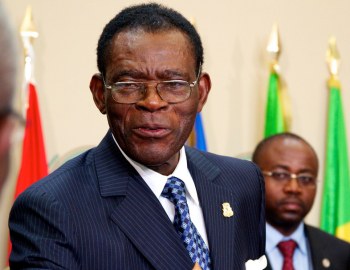
The case of Equatorial Guinea is a flamboyant case of African oil rich nations crippling under poverty due to corruption and political tyranny. As reported by the Global Witness:

“In 2011, Global Witness reported that his flamboyant son Theodorin Obiang commissioned a personal super-yacht with a handsome price tag of $380 million, worth three times the country’s combined budget for health and education.”[1]

The case pleads for a prioritization of anti-corruption measures as a pre-requisite for poverty fighting. The state restructuration through the elimination of centers of powers is a prominent step towards fair distribution and exploitation of resources, but looking deeper into the cultural aspects of African Politics, there is a key feature to explore: the culture of fear.

African politics is always tainted with political figures with unlimited powers, in most cases tyrannical and in few barbarians. The genocides and group massacres led by government militias and presidential paramilitary troops are common currency, and the people’s responses are a scarce commodity. It is indeed unthinkable to still picture African states where rulers dominate a disgraced populace in the 21st century, a century where democracy, human rights and grassroots movements are weighing variables in the world political chess-game.

Once a nation is unchained from political constraints and totalitarian leaderships, the prospects for growth, economic expansion and welfare state building follows in an inherently natural process. This process is moreover self-sustaining: under democratic state building and governance, the wealth distribution and market liberalism alleviates socio-economic constraints and encourages progress through renovating education which produces efficient, productive and values’ bearers’ citizen who make up the future democratic political frame of the nation.

Though internal political reforms impact directly domestic governance, it facilitates as well development through the resistance of foreign operating parties. African dictatorships have never survived without foreign assistance, be it military, financial or logistical. The same democracies who denounce genocides and human rights violations through the state spokesmen are those who operate the military industrial complex and the financial institutions which provide war criminals throughout the world with the necessary weapons and financing. A true democracy thus allows the wider audiences to question, monitor and assess state performance and stand against narrow profitable relations between state officials and foreign operators. But where does Investment appear in the process of Political democratization?

A tyrant in the Middle East, in Southeast Asia or in the heart of Africa is all but promised for a stable future. Autocracies lay the path for instability and high risks in the long term, thus pushing away investors whose speculations on the value of their assets deems them unprofitable if invested in a nation with potential turmoil in the backyard. The case of Iran, Iraq and several Sub Saharan African nations exemplifies the case: why would banks, multinationals, sovereign funds and individuals put their money in projects that are not guaranteed to last in cases of military coups, wars or social unrests? The high risk investments have proven to be a fashion few years ago, but with the fallouts of the financial crisis, the world post-2008 is far from getting back to the custom of high risk – high benefit ventures.

To be continued...
Mohamed Amine Belarbi


[1] Global Witness, “Son of Equatorial Guinea’s dictator plans one of world’s most expensive yachts.” Press release, 28 February 2011.

Monday, August 13, 2012

Moroccan Youth Shadow Government

My latest article on the Youth Shadow Government

Extract:

"Pushing for greater representation of Moroccan expatriates, calling for the establishment of a rating agency for NGOs’ performance and wider accountability and audit for state grants to the civil society are few examples of what the youth shadow government has already called for and duly communicated to state officials. These are the true reforms that a nation aspires to, and this is a powerful representation of the down to top reforms scheme that most thinkers advocate for as the only way forward to induce a culture of reforms, advance and progress."

Moroccan Youth Shadow Government

Wednesday, August 8, 2012

Post-Revolutionary Egypt: What's Next

Now the full document can be consulted entirely in PDF format in Scribd and Issuu.

Note:

This document is the intellectual property of both Mohamed Amine Belarbi and the Arab Institute for Youth Policy Making. Any copy or redistribution of part or of the entire essay ought to include a reference to both parties. This essay is referenced as a publication of the AIYPM sourcing in its branch in Morocco, the MIYPM.
You can consult the AIYPM blog on the following address: www. aiypm.co.cc

Full Document:
Post Revolutionary Egypt

The Issuu version can be consulted here:


Post-Revolutionary Egypt: What's Next? Part 4


Politics & Religion:

One would hardly conceive consulting a chapter on state reforms without having separate rooms for religious and political analysis and recommendations, yet with an elected president formed and nurtured under the auspice of the Muslim brotherhood in Egypt, it is becoming harder to distinguish between political agendas and religious commandments even though glorious empires and successful state management has once been led by fervent prophets and religious apostles.

Political Islamism nowadays has bridged the divide between state management and religious theology, and the Muslim brotherhood fashion has embodied such philosophy following the recommendations of its founder AlBanna. A legacy which, though inspired revolutions and ignited incidents, is still at the center of interrogation by both the public opinion and the centers of powers worldwide. Far from being compared to the Turkish Gullen movement who advances an Islamic agenda through education and business, the Muslim brotherhood embraces a full political approach directed towards the control of key positions inside the government, thus implementing its vision through state organs.

This being said, the mischievous game of politics can easily put the current government under stress and recurrent test, especially that the social, religious and geographical features of Egypt allow malicious schemes to take effect without much planning. Whether a plot to blow up a church, or a furtive attack on border patrols near the Rafah crossing point, the blames of state mismanagement or blind and reckless compassion with Hamas are  common currency in Pharaoh’s land, a currency too easily manipulated by the political lack of regulation.

The Egyptian government needs to act quickly and efficiently to reverse the power flow and to assert the will of the public opinion as main source of legislation instead of induced and forced actions prompted by the Military council and allies of the former regime. This can be achieved through greater representation, active engagement of the civil society and formation of key political alliances. The greater representation has already been upheld by president Mursi when nominating Coptic Christians in key positions in the government, yet the increase of the female representatives in the government has not been as much secured. Nominating females for senior posts in the state will not only draw support and appreciation from the public opinion, but will also clear the doubts about the approach of the Muslim brotherhood indoctrinated president about women rights and representation.

Moreover, representation ought not only to give justice to women, but also to the generation Y without which a revolution could not proceed. The inclusion of the young individuals in the ministerial cabinet and state offices is a priority and an ethical imperative to pay tribute to the effort of the grassroots youth movements who came to the streets and scarified lives and wealth for the nation’s welfare. With a 71% literacy rate and a an almost 63% of population aged 15-64[1], the young generation is not only abundant, but is also educated and well-endowed to uphold responsibilities in the political spheres of the country. Relevant fields of state legislations cannot be competitive, visionary and innovative unless under the guidance of a young official. Such fields comprise the ministries of new technologies and higher education and scientific research.

On another note, political alliances are crucial for healthy political performances both due to its effectiveness in channeling efforts towards consensual goals and preventing political confrontation which undermines state efforts in most cases. The political offspring of the Muslim Brotherhood, the freedom and justice party, ought not to indulge in ideological quarrels with the secular and liberal movement in order not to alienate itself amid a growing critical base in the Egyptian street. The alliances can be policies-specific and thus would neither endanger the ideological integrity nor identity of the Muslim Brotherhood representatives. The policies pertinent to the nations’ economy, for example, can be drafted in coordination with the liberal movement which abides by the market oriented principle of economy. Their inclusion in the process of establishing a liberal, market oriented vision for Egypt will indeed strengthen the image of the current government as an inclusive institution meant to represent the entire ideological and political spectrum in an effort to incrust a political democratic offset to the leading Freedom and Justice party.

Finally, sound state management in a democratic society ought to empower the civil society and uphold it as a crucial partner in elaborating the domestic policies. The civil society in Egypt has proven to be an illuminated establishment with unequal human resources, yet the attention required to recognize the work of the numerous associations and equip them with the necessary financial and logistical needs has been overlooked. Joining the different NGOs in state building is not only a matter of democratic exertion but is a point pertinent to national security concerns. Several NGOs in Egyptian and foreign territory acquire funding and expertise from foreign government to promote an agenda which sometimes threatens Egyptian interests. Given the political circumstances which put Egypt on a sensitive position in the world chess board, and the disturbances which populate the relationship between Egypt and several governments amongst is Israel, allowing the civil society to be infiltrated by foreign agendas because of certain political alignments or plain negligence is a fatal error which endangers the homeland security at the highest levels.

This being said, these set of recommendations and opinions are to be observed and implemented, and timing in state management is a crucial feature which alone can determine whether a government can indeed succeed or fail dramatically regardless of the nature of its policies. Egypt is in a historical turnout, and recalling the losses in human and financial resources makes it clear that enough has been suffered and scarified, and time has come to do the right things at the right moment.

Wednesday, August 1, 2012

Independent Skies Magazine 4th Issue

As part of flourishing partnership with Independent Skies, it is with pleasure that I present you the 4th edition of the Independent Skies Magazine.


I wish to thank the team for the brilliant effort put into such publication, and special thanks for featuring my article on my visit to the EU parliament, and for featuring this very blog on their magazine.


Post-revolutionary Egypt: What’s next? Part 3


One thing worth noting, the Egyptian military is everything but a defense body preoccupied with the nations’ security and protection. The Supreme council of the armed forces is operating not only as a nation’s arms bearer, but indulges in day to day operations related to real estate, tourism, business transactions and political follies.

"It's a business conglomerate, like General Electric," said Robert Springborg, professor of national security affairs at the Naval Postgraduate School in Monterey, referring to the Egyptian military. "It's represented in virtually every sector of the economy."[1]

In a country where a transition from military to civilian rule has just taken place, the nostalgia for power remains a driving force for decrees, actions and conspiracies led by the SCAF generals. What one ought to understand is that non-confrontational diplomacy is not enough in the case of Egypt, alienating the SCAF the way the Turkish Islamists alienated the Ataturk military officials is the only way to regain control over state affairs and domestic legislations.

It is important and crucial for president Mursi to realize the necessity to station the military back into their right position, and failing to do so will have deep impacts on the national security of the nation and on its economic performances. On one hand, the military in Egypt, as asserted by the Global Research Center for Research on Globalization, have been a staunch adversary of free market and liberal transactions. With a tight grip on different industrial sectors, the Scaf advocate and advance state ownership over the private sector in order to secure the privileges and interests they cultivate through state owned corporations. It goes without mentioning that without liberal policies and a more market oriented economic strategy, the Egyptian economy will suffocate under the pressure of foreign competitiveness and services.

On the other hand, the current conditions of the military are worrying. The weaponry and logistical acquisitions are in a poor condition, and the readiness of the Egyptian troops is far from meeting the necessary requirements in case of conflict escalation. The recent incidents spanning along the Egyptian border have pinpointed to a lack of management of the territorial security, and recurrent breaches by smugglers, fighters or immigrants could jeopardize the safety of Egypt, especially in instances of attacks against Zionist troops or rocket firings which would ultimately lead to a retaliation Egypt is far from being able to support and legitimize.

Looking back at a neighboring country, Turkey, one can draw lessons on how to assert civilian state leadership and overturn military arrogance and inference in domestic legislations: Sledgehammer!
Sledgehammer conspiracy was the widely mediatized set of trials that involved top Turkish military, with the majority of the chief secular generals convicted for attempts to lead a military coup and seize power from the AK civilian government. Whether real or simply an Islamist masterminded scheme to get rid of the trouble makers who opposed the non-secular civilian leadership, the AK party managed to drag top officials to the courts and induced many to resign promptly from their functions.


A similar Sledgehammer scenario could easily be implemented in the current conditions, and a quick look at the charges held against the Turkish military allows us to draw clear similarities:

“It reportedly involved plans to bomb mosques and provoke tensions with Greece, in order to spark political chaos and justify a military takeover“[2]

In a country where the shadowy decades of military rule still resonates in people’s minds, and where the Supreme Council of Armed Forces is widely pointed as culpable and accomplice in the mass unrest unraveling in Egypt, holding formal accusations against the military will not only prove to be legally founded, but will as well secure the approval of the public opinion.

The military establishment in Egypt is corrupt on different levels, and a massive rehabilitation of the institutions is a prerogative the new Egyptian government ought to prioritize. A top down cleansing of the military should set the priorities of the presidential agenda since the political motives in the military are comprised to the leading elite.

It is time to ensure the safety of the nation both domestically and abroad through a strong military institution, independent and non-aligned with national political currents, a military transparent and sophisticated with high levels of alertness and readiness at all times. Partnerships ought to be explored with regional allies, and Turkey is a well-developed nation with highly skilled and well equipped army contingents.

An important notion in the military institution is armament. Armament sets forth two important aspects: technology advance and price competitiveness. These two attributes are well covered by the Turkish state. As a leading arm exporter (leading armament manufacturers corporations ASELSAN, Mechanical and Chemical Industry Corporation MKEK, Turkish Aerospace Industries TAI), a world top military spender (15th),a NATO member and a roaming economy with budget surpluses, Turkey is the perfect ally to seek in Egypt’s military restructuration. It goes without saying that the political and ideological likeliness of the two governments will furthermore facilitate any potential alliance and military collaboration between the two states.

To be continued...
Next: Political and Religious course of action

[2] Turkey: Military chiefs resign en masse, BBC website, http://www.bbc.co.uk/news/world-europe-14346325

Thursday, July 26, 2012

Post-revolutionary Egypt: What’s next? Part 2

Never too late: industrialization, services and technology

Egypt, since the major period of industrialization under the Nasser administration, fell back on the international arena to a mere import oriented economy relying for its most on foreign production to fulfill its market’s needs. Nowadays, after a toppled regime and a genuine declared war against corruption and centralization, the Egyptian economy is ready to engage once more in the competitive sector of major industries spanning from the petrochemical sector to the production and assembly of automobiles and military weapons. The educational system in Egypt is one which is acknowledged for its quality and excellence, a success mostly witnessed through top class intellectuals and engineers whom Egypt exports throughout the world.

One would doubt the necessity and indeed the potential attributes of an imminent industrialization in Egypt, especially in a world which industrial wheel has been rotating since the 19th century, but the current situation in the Middle East and especially the Gulf attests of a different reality.

Acetex, Corporation has entered a newly formed joint venture to build a US 1 Billion $ plant in Jubail Industrial City in Saudi Arabia[1], and this comes after Qatar built the biggest gas-to-liquid plant at the grand pleasure of the Qatari Emir. The region is witnessing a fervent ascension to major industrialization, and it is a favorable time for Egypt to enroll in such efforts.

Whether through implementing gas and petroleum refinery plants in joint ventures with the gulf countries as did Tunisia along Qatar in a 2 Billion 2$ Investment[2] (Especially that the oil and gas fields in Egypt are poorly exploited through an old and inefficient exploitation and delivery infrastructure), or be it through the privatization of the state owned plants in order to reform and improve the soviet dated firms and production lines to the requirements of the 21st century.

Another aspect of the Egyptian economy is its large agricultural activities which account for 13.5% of the GDP. Looking back at the wealthy fields across the Nile strikes the viewer immediately: the scene never exceeds the view of poor installations, few human resources and archaic tools of production. Nations with far smaller land mass whose workforce in the agricultural sector is dwarfed by that of Egypt still manages to have a colossal input in the world market. What is needed is indeed a reform and improvement of the mean of productions in Egypt, a qualification of the workforce and the introduction of technology, genetic selection and mass production in the agricultural fields. This will boost not only the productivity, but will as well expand the usable land mass in the vast desertic fields as what is been done in Saudi Arabia and co.

Egypt is rich in resources, and the abundant oil, gas, iron, manganese, limestone or phosphates are here to further confirm it. The human resources to exploit these natural riches are as well in excess, so what is needed is a true political willingness to advance the economic competitively of Egypt instead of using induces poverty and illiteracy as political tools to enslave the people as has been done during the Mubarak Era.
Furthermore, the prospects of monetary rehabilitation are appealing, and the necessity for Egypt to uphold thus far a diplomatic and strategic foreign policy supportive of the US is more than encouraged in order to secure the American Billions of dollars’ worth of aid. This, coupled with an up to market prices trade with Israel over the oil exports would enrich the state monetary reserves of another dozen of billions $. Finally, the alignment of Egypt with the West and the gulf countries in their effort to ignite a war against Iran will inevitably poor on the Egyptian reserves juicy banknotes issued by the petro-dollar rich and grateful gulf nations  for the Egyptian efforts to sustain “peace and stability” to the region.

An enhanced industrialization, a fierce war on corruption and a rehabilitation of the monetary system and relief of the aggregating debts is to engage Egypt in the path of economic competitiveness and major industrial production, a deeply needed pathway where the economic survival of the nation ultimately rests.

To be Continued...
Next: Political Reforms

Tuesday, July 24, 2012

Post-revolutionary Egypt: What’s next? Part 1


Almost a month has passed since the crowning of Mursi as President of Egypt after a runoff election which put the whole country of not the world on a standstill. With a nation deeply divided over the nature of the presidential candidates and their respective agenda, the victory of the Muslim brotherhood is far from being celebrated as an achievement, and rather mentioned as an inevitable destiny the presidential elections put forward before the sealed box container could unveil their secret ballots.


Now that the results are known and the president has been sworn to office, the future of Egypt remains as uncertain as during the midst of the revolution. With remains of the old regime being, as custom goes, fiercely pointed as conspirators behind any vice the country suffers and every tragedy the public opinion hears of, and a zealous base of supporters of Ahmed Shafiq who see stability as key component of the country’s daily life, a stability threatened by a potential confrontation between the Muslim brotherhood and the Supreme Council of Armed Forces.

Regardless of the fuss raised about the secret agendas and the hidden hands, one thing remains certain: Egypt is in downwards financial, social and political slide, and that is far from being an unseen and dubious course of events. The President, in a challenge not only to prove himself a worthy figure, but in a confrontation as well that will shape the future of the Political Islamism across the MENA region, can only thrive for a solid consolidation of his victory through the accomplishment of highly valued successes internationally, and most importantly on the domestic arena.

I will develop a set of arguments and ideas about the future decisions that ought to be taken in the fields of economics, politics, military and religion in order to insure a peaceful transition towards democracy for a nation that spilled enough blood to buy its dignity and prosperity back from decades of tyranny.

Economy:

Being the 27th greatest economy with a GDP flirting with the 530 Billion $ is something to be proud of, yet endangering the nation’s wealth and input has become the key concern for the Egyptian citizen, blaming the financial collateral damages of the revolution for the downwards spiral the nation has been experiencing on the casual streets as well as on the stock market.
The spilled billions of $, along with the damaged industries and slowed production has merged to establish an unsustainable financial situation that puts at risk the political credibility of the new leadership and questions the very necessity of the revolution in the first place.
Looking back at the nature of the country, its past focal industries and the professional sector its universities produces, one can lay a working scheme for how the nation ought to operate its economy in order to boost its GDP and consolidate its revolution with a flourishing democracy propelled by promising financial records.

1.       The Nile:

Aiming at economic development cannot acquire its credibility unless the fuel to power plants, to fire machines and to melt iron can be secured. Providing electricity for the hungry fuel-consuming industries must be a priority for chief economic and financial advisors for the new leadership, and doing so won’t need the implementation of the American or Chinese natural resources exploitation schemes. (Neither American military driven quest for oil nor Chinese diplomatic venture in African dictatorship controlled markets). What nurtured the civilization of the great pharaohs and what witnessed the royal naval processions of ancient monarchs is well endowed to provide the Egyptian economy with the necessary blood to water its veins. The mere figure of 12%[1] is the amount of electricity produced by the Dams scattered across the Nile in the Egyptian soil, and given the political turmoil on its southern borders, Egypt could easily increase the figure to new records.

The 1959 Nile Waters treaty entitles Egypt to 82% of the water volume, thus restricting the access of Cairo to the full capacity of the river’s potential electrical output. The plans of the former Egyptian regime to increase its number of Dams along the river have been met with furious discontent from the southern neighbors spanning from Sudan to Ethiopia. The political conditions of Sudan and Ethiopia now are a domestic burden prone to be exploited by an awaking power in the North.

Sudan, now divided into two countries since the independence of the south, is not in a position to sustain its internal politics and economics due the loss of the major oil reserves and to the cracking of its domestic affairs between political unrest and social revolts. Egypt, through the offering of economic and diplomatic assistance to Khartoum in its struggle with Southern Sudan could manage easily to turn the currency of such business into Sudan’s acquiescence to the ventures of Cairo in the Nile resources. Khartoum is now draining in its stockpiled petro-dollars which are everything but eternal, and the current socio-economic conditions warns of an imminent drought of the nation’s monetary reserves. With nothing to sustain the efforts of war and diplomatic confrontation with Juba, Sudan will see the extended hand of Egypt as a divine intervention which ought to be celebrated and greeted by any necessary compromises and sacrifices.

A full access to the Nile, even with Khartoum consent and Juba’s acquiescence due to its abundant oil reserves and thus lack of interest in Hydro-electric power wouldn’t be possible without Ethiopia’s approval. This challenge could be overcome by coupling a strategy of intensifying trade relations and Egyptian expertise exports to Addis Ababa to help develop the inexistent infrastructure and implement industries meant to strengthen the fastest growing non-oil-dependent African economy between 2007 and 2008[2] (with what it brings of industrialization ties to Cairo and thus relative dependence on it), and through a stronger US-Egyptian cooperation to counter Chinese intrusion in Ethiopian market since it would pose a serious threat to the water resources which Chinese economic tentacles in Africa avidly consumes.

Such strategy, if put in place could expand Egyptian access to the Nile water over its prescribed shares, granting greater hydro-electric capacity and wider civilian and industrial access to the river’s waters, thus empowering furthermore the Egyptian economy and sustaining its supplies of fuel through a consolidated electrical generation through the Nile waters.

To be continued...
Next: More subtopics to be covered in Economy: Industrialization, Tourism, Services and Gulf investments

Sunday, July 1, 2012

What reforms needed for an AL Qaeda in decline Part 4


Qualified Human Resources for enhanced performances


What makes up an organization is neither the brand nor the product, it is foremost the quality of its working force despite its size and proportions. Many would argue that the Al Qaeda network should concentrate its resources on upgrading its recruitment process, yet I argue, along line Bruce Hoffman, that quantity is a negligible factor in the working mechanisms of militant groups. Focusing instead on qualifying the members of the network and recruiting selectively skilled individuals will enhance beyond proportions the reach and impact of Al Qaeda.

"Terrorism is not a numbers game," says Bruce Hoffman, director of Georgetown University's Center for Peace and Security Studies. "That is the point of terrorism: A small number of dedicated, well-trained, and highly motivated individuals can have a disproportionate impact on any society's sense of security and profoundly affect government policies."[1]

It is indeed clear to the public opinion, as it is for policy makers, that skilled militants who can hack into GPS navigation systems, perform high profile assassinations, assemble explosive devices and sabotage nuclear stations are far more dangerous than individuals with lite weaponry in the middle of the Afghan chain mountains.

It is indeed precarious for the network survival to uphold the philosophy it instated at its beginnings, a philosophy which imposes on the group a volatile chain of commands with no specification of long term targets. As al-Hammadi, Khalid points out in his series of articles in Al Quds Al Arabi: Al-Qaeda's management philosophy has been described as "centralization of decision and decentralization of execution.

The decentralization of execution puts forwards numerous risks and imposes a specific modus operandi. As restraints are loose on the command execution of the group’s operational units, the necessity to achieve successful attacks in the shortest delays overturns the need to secure an elaborate and impactful strategy with low costs and high gains.

The comparison drawn between the attacks of Madrid, the 9/11 and other major accomplishments of Al Qaeda, and the seeming less assaults and suicide bombings executed in Afghanistan and Iraq points the importance of carrying on elaborate missions with skilled executives instead of rushed strikes.
Investing in human resources should become the driving motives of Al Qaeda, and securing recruits with college and university degrees in Engineering, Computer sciences and military specializations will allow the network to move from decentralized anarchic execution to focal and high precision missions of the scale of the 9/11.

An example of such investments Al Qaeda should start engaging on is of the caliber of high tech research on communication and networks breaching. The latest news in BBC of the researchers who used spoofing to hack into a flying drone shows the possibility to use knowledgeable university students to deviate flying targets using GPS navigation systems and use them as projectiles or intelligence sources[2].

These are the 21st century new challenges of Al Qaeda, and in a world of rapid change an exponential advance, catching up with the drastic improvements in the different vital sectors in the military field or civilian sectors is a necessity for survival. The working mechanisms of the past have succeeded in securing a temporary expansion of the network, but since the post-soviet era, Al Qaeda has only receded from the field of action and from the minds and hearts of its supporters. A visionary leadership, under the command of a young generation of executives with appropriate knowledge and qualifications to meet the ever improving counter-terrorism techniques and policies worldwide is more pressing than ever.

Mohamed Amine Belarbi

Saturday, June 30, 2012

What reforms needed for an AL Qaeda in decline Part 3


Armaments provision and nature

We cannot talk about a militant group while omitting the primary action course of it: armed confrontations. The paramilitary nature of the network imposes on it a constricted weaponry range and military tactics. Besides the early stages of Al Qaeda where thanks to the American advanced weapons the network could almost rival conventional armies, nowadays the modus operandi has been stagnating in favor of a militia warfare style which is not only outdated but undermined by the armaments of the network opponents. 

Making use of the AK 47 and mortars as standard artillery has proven to be redundant in fighting US troops in Afghanistan, with few casualties ever scored on bases storming and military compounds shelling. The suicide bombings, on the other hand have gained the bad reputation of overlooking military personnel and instead, inflicting heavy civilian losses with no value for the military equation of power in the region. A quick insight on Al Qaeda’s major weapons with actual impact on foreign troops tops IEDs as the deadliest of all. The Improvised explosive devices are inflicting major losses to coalition forces in Afghanistan, with hundreds of victims in the last years flying back to the US either in coffins or missing body parts. What makes these bombs efficient and reliable are aspects which are worth considering: non-confrontational and remote. 


Applying these features to the broad armament capabilities of Al Qaeda while getting rid of the other weapon sets will allow a concentration of expertise, logistics and finance into a weapon sector counting numerous achievements in its archives.  What else besides IEDs could Al Qaeda opt for? The popular choice is, as further confirmed by eminent militant groups around the world such as Hezbollah and Hamas, the usage of short range missiles and katyusha rockets. The shift of target allows a full usage of such technology which, besides being cheap and affordable in the black market, is of a destructive effect. Boosting the rocket launch capabilities of Hamas and collaborating with the group to carry out strikes inside Israel will spare Al Qaeda more human resources while increasing its recruitment process due to the achievements it ought to publicize and take advantage of. The possession and acquiring of these types of weapons is not demanding, especially in the recent circumstances of the chaos post Arab spring. After a flow of weapons from Pakistan and Asian neighbors, the chart of displacement of weapon stocks is now displaying a whole different picture. Libya has become the primary source of non-state regulated weapon transfer to the Middle East in the latest months, and the recent instance of seizure of weapons in Egypt declared by the prime minister as the biggest of its kind in Egypt history, is no more than a confirmation of the new reality enclosing the fruitful business of arms trade. With Syria on the edge of collapse, Al Qaeda ought to secure already strongholds in Opposition tows in order to establish the necessary contacts for future smuggling of weapons out of Syria which, it is worth remembering, is one of the major importers of Russian missiles in the region.

Besides the arms with physical reach onto the enemy, it is now becoming a fashionable trend to turn for the new warfare measures in the cyberspace, as it is an effective mean of selective destruction with no costs involved. The increasing reliance of infrastructure networks, electricity and water grids as well as military, energetic and nuclear industries on the electronic communication lines of execution makes them a perfect target for wide scale attacks with potential effects on whole regions if not the whole country. Be it through the misuse of water grids, the deflection of drones and GPS navigated rockets or through the disturbance of nuclear power facilities, Al Qaeda has all to win from investing heavily in developing operational teams specifically trained to carry cyber-attacks on governments and groups. The affordability of electronic resources for cyber training, and the the rise of skilled and qualified human resources in the domain of communications and electronics will enable Al Qaeda to exploit the fragile cyberspace defense system of major nations who came to invest in the domain of countering cyber-attacks recently with the emergence of the virus cases of Stuxnet and flame.

To be continued...
Next: Human Resources and Recruitment