Showing posts with label Politics. Show all posts

Saturday, July 6, 2013

Why I say No to the military coup


With no introductions, here is my personal take on the Egyptian recent developments:

Well I disagree with the way they brought Morsi down; if it's going to be a democracy, then let the impeachment be through the voting ballots, not through military coup in a country divided heavily. It is easy to miscalculate what a majority is when we use as references pictures of thousands or millions marching and chanting against the president, but truth be said, millions in a country of 80 million individual is far from statistically meaning anything.

Even if scores of the population went down against Morsi, he still have as many supporting him, and throwing the votes of the millions who voted for the Islamist president down the trash is not only a slap against what democracy is standing for, but is also an open invitation for direct confrontations that can easily escalate into a civil war. Indeed brotherhood failed in dealing with several issues of economic or political nature, but isn’t it the case for most democracies and political governing systems throughout the world? The day an elected government manages to tackle all domestic challenges and successfully address them, then we’d have achieved that utopia no one talks about except in books of fiction. A military take over and mass detentions of Brotherhood figures doesn’t seem to be an achievement of a popular will, but most likely seems to be a rushed reaction to deal with an uneasy transition, and most likely to cause an even greater crisis given the stigmatization it has brought against Political Islamism and the alienation of a segment of the population’s will or political choice.

Some may argue that the political environment, as well as the judicial and institutional realities of Egypt may have prevented a democratic action to impeach the president or to bring on early elections, but let us remember that the Egyptian people were the ones voting for Morsi in the first place, and the ones taking on their disapproval to the street didn’t allow the president elect a fair period at the helm of the government to actually produce results. One year is not enough to judge a president (that is why in most democracies presidential terms span through 3 to 5 years), especially someone who took office after a revolution, an economy in the red and security in jeopardy.
Egyptians may have set the bar too high, and it's impossible for a president or a government to fix everything an entire chaotic country the first months, Transitions are hard and demanding, but Egyptians appear to forget that the nation is gathering itself out of a regime meltdown and is in a re-evaluation phase where all principles of governance and political institutions are put under scrutiny and reconstruction.

Maybe the Muslim brotherhood is not that good in many respects, but the reality is that they are the most organized and they won the elections. If the Egyptians are against them, then let them show it through political parties and political participation;
The best way to oppose some political or ideological organization in a democracy is to organize and face them in the battlefield, aka the elections; making a mess, encouraging anarchy or getting the military involved never solves anything but just brings the country to the brinks of a civil war.

Many you argue with tend to delegitimize the popularity of the Muslim Brotherhood by invoking that their supporters are mostly residents of rural areas and are not fully aware of the Brotherhood’s lack of good governance and whatnot, yet this argument seems closes to a self-condemnation because the very people who preach it disregard an important question: If the rural areas are so blinded into voting for the devil himself, then why didn’t the previous regime or the numerous NGOs set a comprehensive framework to spread awareness to rural areas or improve their living conditions as to draw them away from the Brotherhood’s grip? It is easy to point fingers, find excuses, and fall into a state of arrogance where we categorize a segment of the population as worthy of the right to choose their political representatives while denying it to others.

What is alarming in the current Egyptian crisis is the far reaching implications it has on the MENA region and the Sahel. Political Islam has always been stigmatized because of its tendency to promote violence and preach a bloody agenda of extremism, ultra-conservatism and anti-human rights policies, yet when the Political Islam renounced violence in the post Arab Spring through the participation of Islamist factions in the political life (something they have been banned from doing), the reaction from the street and from a certain segment of the population has been outright rejection of their legitimacy and reactionary refusal of an agenda they didn’t even have the chance to assess because of the many prejudices held against it.

Political Islam now is being given another excuse to lose hope in democracy and democratic tools of participation. The rule of law, although preached and professed to be for everyone now appears to be an exclusive right of the secular, the liberal and is forbidden for Islamist models of rule. This leaves no other means for the Islamist to voice their opinions and shape politics other than through violence, which is why the West, championed by the US is reluctant on approving of the military’s move given the disastrous implications it can set in motion in the future.

After Algeria and Palestine, Egypt joins the club of countries where the military unlawfully deposed a democratically elected government shaped by Political Islamist agendas, and the consequences as in these nations is a return of extremist violence, something which we already started witnessing in the Sinai where armed operations against the military are being conducted by Islamist factions.

Closing TV channels to prevent the Brotherhood from decrying the military takeover, rounding up their key figures and claiming that major cities are the only representative of the Egyptian will stems from a fear that Political Islam may become the key force driving politics and Egyptian domestic affairs, a turn event that is far from making the strongholds of corruption happy, and is sure to threaten the economic empire of the military as it did in Turkey with the AKP.

Egypt is in a turning point, and much of the region’s future development will be shaped by what actions are set in action in Egypt during the crisis. Be it a civil war, a return to armed confrontations, a radicalization of the Muslim brotherhood and its operations or a return to civilian rule through the restoration of the president elect are all potential outcomes that can either build or break modern Egyptian democracy, or at least the nation’s stability and security.

Mohamed Amine Belarbi

Sunday, April 28, 2013

When Chemical weapons and terrorist groups are better excuses


Syria's Chemical Weapons are a true "game changer" for international terrorism

The last few weeks have been generous in events and catastrophes, from the Boston bombings to the Iraqi bloodshed, from the attack in Libya against the French embassy to the Somali terror wave and the Iranian devastating earthquake, yet the landmark that has been highly overlooked and is of critical importance is the suspected use of chemical weapons in Syria.

The French, British and Israeli intelligence community were affirmative in proclaiming that Assad’s regime indeed had recourse to chemical weapons against the rebels, and the allegations were soon to be followed by several pictures of Syrian casualties presenting symptoms of chemical poisoning which the White House deemed possible yet not supported by clear and irrevocable evidences.

Deemed a “red line” not to be crossed and a “game changer” by Obama, the systematic use of chemical weapons by the Syrian regime seems to be a victorious challenge to the current administration who cannot but push away the red line further, hoping that Assad would deign cross it and save the US another humiliating and embarrassing stance.

Yet…

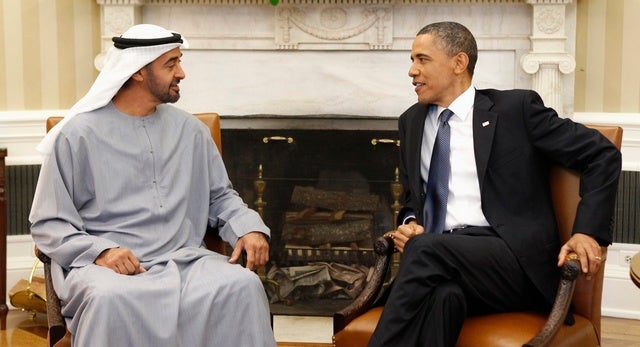
As much as it seem that a potential intervention is unlikely giving the cautious rhetoric of Washington, the events on the ground suggest a wholly different approach. The US has witnessed the last week a convening of various Arab leaders who, by coincidence or design, have been scheduled in the oval office for private talks with the president at around the same time period. From the Emirati crown prince of Abu Dhabi to the leaders of Qatar and Jordan, the choice Obama made is highly strategic since these countries are the main regional players in the Syrian conflict, described by Fox News as “believed to be arming or training the rebel forces that are seeking to overthrow the Syrian government”[1] in a recent article tackling the meetings Obama held with the aforementioned leaders.
The timing of the meetings and the announcement of the usage of Chemical weapons by the Syrian government suggest a covert preparation for an imminent action in Syria. If the evidence about a determinate US plan to intervene military against Assad are blurry, the arguments for such action are not lacking with regards to US interests and national security imperatives.

The chemical weapons stockpiled in Syria are significant in numbers, to the extent that it is believed and assessed by various intelligence communities that “The Syrians have one of the largest chemical weapons arsenals in the world.”[2] Chemical weapons are the main source of alarm for the international community when it comes to the Syrian conflict, first because of the prevalent presence of Al Qaeda affiliates in the battle ground and their noted superiority in combat and organization, and second because of the ease of use and deployment of chemical weapons in terrorist incidents as in the 1995 subway Tokyo attacks.[3]

The Al Nusra rebel front, one of the most powerful factions battling Assad’s regime and by far its most radical, didn’t hide its allegiance to Al Qaeda as not only a small part of the network, but as significant enough to rush the Al Qaeda in Iraq into a merger with the Islamist jihadist cell. The merger was announced by Abu Bakr Al-Baghdadi, head of the Islamic state in Iraq, who proclaimed: "We announce the abolition of the Islamic state of Iraq's name and Jabhat Al-Nusra's name and their amalgamation in one state under one name: The Islamic state in Iraq and the Levant."[4]

The news stirred a wide controversy regarding the armament of Syrian rebels, an armament pursued with eagerness by Qatar and Co who cannot wait to see Assad regime falling apart. Yet the issue of channeling the weapons to the right people is of little concern compared to the chemical weapons acquisition. The weapons delivered to the Syrian rebellion are of tactical use and have a low range of destruction, aimed primarily at inducing small-scale, targeted damage, while the chemical stockpile of the Syrian government contains primarily Sarin, a nerve gas agent that can spread over large areas and induce quick death through inhalation.[5] (The Tokyo subway attack stands witness to the deadly effect of Sarin that claimed the lives of 13 Japanese in 1995).

The ambitions of Al Nusra front, and of Al Qaeda de facto, to control and lay hand on chemical nerve agents is no news, yet how close the group is to attain such goal is alarming, and indeed helps explain the sense of urgency the intervention in Syria is prompting in the corridors of the White House.

In a recent article in the Telegraph, Colin Freeman writes:

The fight for al-Safira is no ordinary turf war, however, and the prize can be found behind the perimeter walls of the heavily-guarded military base on the edge of town. Inside what looks like a drab industrial estate is one of Syria's main facilities for producing chemical weapons - and among its products is sarin, the lethal nerve gas that the regime is now feared to be deploying in its bid to cling to power.[6]

The prospects of the Chemical weapons falling in the hands of extremist groups are recognized to be not only a domestic threat, but also a severe security breach for all regional actors including Israel and the Arab nations. Most probably the chemical weapons would be directed towards the spots where Al Qaeda is mostly present and where the odds for success are in the group’s favor. Iraq, with its weekly ever rising toll of deaths and attacks, would be the first country outside of Syria where the Sarin nerve agent would be deployed given the ability of the Al Qaeda operatives to smuggle the stockpiles into the wrecked country. Securing the chemical weapons is the priority of al Nusra front, and Syria as it stands now is not a safe haven to safeguard the precious prize. The need to move the chemical weapons to Iraq, if ever recovered by extremist cells, is apparent since the deployment of Sarin gas doesn’t need to be in large proportions. The rationing of the Chemical weapons into mobile portable loads carried by individuals for targeted locations is the modus operandi Al Qaeda would adopt given the restricted access it might have to the substance, and from then on the branching out of the chemical agent would take effect until tracking the initial containers becomes a futile intelligence efforts. The network of dormant cells Al Qaeda manages throughout the MENA region and beyond makes from the acquisition of nerve agent a true “game changer” in international terrorism.

Although many would recall the scandal of the “inexistent” Iraqi WMDs to refute the Chemical weapons excuse to intervene in Syria, the difference today is that we are faced with a situation where WMDs existence is not debated but held as a fact. The Syrian Chemical weapon stockpiles and the omnipresence of Al Qaeda affiliates in the battlefield is not debatable, and the recent battles ranging near military bases harboring nerve agents production and stockpiling facilities hint clearly to the possibility that a catastrophe situation might rise at any moment, a catastrophe where later containment is not an option.

Many have started calling for a more strategic approach towards supporting the Syrian rebellion, and it is now more than ever critical to adopt such a strategy if we are to avoid the unpleasant occurrence of a nerve agent attack in an Iraqi mall or a Lebanese public square.

Judging from the available mappings of Syrian chemical facilities, most installations trail along the western border with Lebanon and the Mediterranean Sea. This geographical occurrence is of high strategic importance: The necessity to control these facilities is easier since most rebel secured areas lay on the western part of the country, and a potential intervention from regional or international corps launched from Lebanon and the Mediterranean shores will allow a quick takeover of the chemical plants to secure and systematically destroy the nerve agents. The establishments of no-fly zone partly over Syria, and specifically over the Western border will enable a constant monitoring of the facilities and an instantaneous response if hostile groups are seen entering the bases.

Moreover, the differing strength of Al Nusra group and the more liberal rebellious factions suggests that the commanders in chief of the free Syrian Army should redirect their efforts and progressions towards the Western border to help secure the stockpiles of chemical weapons, leaving the battle for Damascus and the most costly fights for Al Nusra faction in order to undermine the capabilities of the group and let it bear most casualties and damages in an effort to overtake it financially and logistically in the post-Assad Syria. The redeployment of the free Syrian army fully in the Western part of the country, leaving the Deir Ezor and eastern Aleppo area for the Al Nusra Group will help mildly separate the two rebellious groups and facilitate the directed armament and logistical provision to the Free Syrian army instead of blindly empowering both factions.

The Libyan downfall and the following dispersion of vast amounts of artillery in the region have had a direct effect on facilitating the Malian crisis emergence and AQMI rearmament. Today we are faced with an even more devastating type of weaponry in an area known for its high volatility. The consequences of Chemical weapons falling in the wrong hands will inevitably set new standards for terrorist activities, and will have far reaching impacts regionally and internationally. This is a “game changer” whose significance the US administration and the Arab governments understand very well, therefore the necessity for intervention has turned from a debate into a consensual agreement whose first signals were the series of meetings with Middle Eastern leaders in Washington, and whose ultimate ending will be a dramatic military action in Syria; the road to the final action is and remains convincing an ever skeptical public opinion, a conviction that seems all too well settling down after a tragic set of events that shook the public consciousness and laid a state of fear we have so many times encountered before major military implications in foreign countries.

Mohamed Amine Belarbi


[2] https://medium.com/today-in-syria/b9e9411a7429
[3] http://en.wikipedia.org/wiki/Sarin_gas_attack_on_the_Tokyo_subway
[4] http://www.bbc.co.uk/news/world-middle-east-22078022
[5] http://vitals.nbcnews.com/_news/2013/04/25/17917132-how-deadly-nerve-gas-sarin-kills?lite
[6] http://www.telegraph.co.uk/news/worldnews/middleeast/syria/10022753/Syria-Al-Qaedas-battle-for-control-of-Assads-chemical-weapons-plant.html

Friday, March 29, 2013

Time for business-executive politics in the MENA region


Time for the technocrats to take over in the Arab World

For decades Arab politics has been an easy ride for the well-established circles that governed states and countries in the MENA region. Whether it is by virtue of blood as in monarchies, money as in oligarchies or simply heavily organized lobbies with a deceiving democratic penchant, the politics our representatives and god appointed leaders engaged in, or lack thereof, has not seen much trepidations or dynamics that would enact a managerial paradigm shift.

Until the outburst of the Arab Spring…

Dictators ousted, oligarchs lynched and awry political institutions brought to a demise, it is more than ever critical to rethink how political engagement and leadership is meant to operate, not because it is now a privilege the Arab societies can afford, but because a transition post Arab Spring to liberal economies and democratic statehood cannot take effect in such a rapidly changing world as the 21st century.

Many could argue that the MENA region is in a natural phase of adaptation to the new realities the street pulse imposed, others would draw the parallel with the French revolution and the consequential bloody transition it endured before evolving into a democracy, yet that would have been the case if we were witnessing a corporate-like adaptation to new consumerism behavior; the reality is that we are now contemplating a damage-control and crisis-containment situation instead of a painful transition forward.

Politics is deeply linked to economics as Karl Marx rightly pointed out in his “Economic Determinism”, and in today’s world, this is even more true given how international trade, politics, business and domestic state management have all molded a unique and fragile system that can be impaired if one of its component goes bust. What I am trying to explain is that the economic environment the Arab Spring imposed on post revolutionary states has made any attempt for democratization unsustainable and non-viable in the short run. Economic recession, plundered foreign currency reserves, soaring unemployment rates and foreign deposits withdrawal are all a deadly recipe that hinders political success and sends approval rates down the pipes. It might seem as if economic troubles are a core part of a democratic transition, yet in a world where economic development is scoring a two digit growth in most parts of the developing world, financial hurdles coupled with political instability just makes it impossible for a country to recover and catch up in time with the speeding train. The public opinion is strikingly showcasing such phenomenon in Egypt and Tunisia where the economics didn’t add up for the casual citizen, bringing the masses from protest to protest with no clear vision of when it will all work as planned when the uprising was structured in the popular consciousness.

The stigma of political affiliation is not making things any easier for recovery. The ideological identity of the various representatives and institutions makes it hard for the public opinion to objectively assess the actions of the leadership, and to allow the state management to take due course. Whether it is the Muslim brotherhood, the seculars or the old regime affiliates, labels are not failing to bring down political efforts to wrap up the mess left behind the uprising. This leads to a state management that focuses not on credentials building, but on active defense of reputations and records from the stinging criticism of the public and from rapacious political opponents who capitalize on the failures of the state.

This allows us to formulate an understanding of the challenges the post Arab Spring imposes, and the potential nature of the solutions that can address such impediments.
The identity stigmatization is best resolved by the adoption of a technocrat system of governance that strips the decision makers from any political or ideological affiliation. A technocrat, not tied as much to approval rates, ideological bias or future political ambitions, can indeed channel more efforts into drafting legislations and tackling the nation’s most pressing issues. Technocrats also have the ability to better resolve the ongoing crisis given their expertise in their respective fields and ability to exploit their professional networks to stir solutions based on third party involvement and contribution. The educated businessman can indeed reach out to the business community and lay a framework for investment that is not tied to a certain political favoritism. The technocrat also, if drawn from the new school of business executives can take choices that lift the economy, education and health upwards regardless of the short-term discontent it creates. The technocrats in short do their job because they are cashing on managerial efficiency, not on political gaming.

Many see the necessity for well-established frameworks, figures and institutions as a pre requisite for state management, yet the importation of the business executives modus operandi to legislative decision making can prove to be a successful undertaking given its enormous impact on actually achieving results, regardless of the ethical reasoning one might have about its collaterals. What the Arab world needs right now are parachuted technocrats, business minded executives who will not stem from the political infertile cultivation fields, but from the likes of Harvard Business school or NYU stern.

What the people want and will always look for is not decent political etiquette, but rather palpable results that can ensure the growth of a prosperous middle class and thriving investment and entrepreneurial ecosystem, although both tend to converge at a certain point. Dubai is a good example of how business minded state management and state capitalism does lead to a prosperous society. Nothing ensures stability and socio economic development like beaming business confidence. If a country knows how to conduct business, then investments, international loans, deposits, economic growth and foreign currency reserves beautifully play along.

Egypt, Tunisia, Libya and hopefully Syria, when the massacre comes to an end, ought to follow the governance trend that is driving the developing world into a surge of growth and progress.

Politics today means business, and those who still want to run countries in the old fashioned way are doomed to a slow and painful death. The train of development doesn’t wait for political reform or ideological fights over power; neither does it choose which stations to stop at. The most critical part is that todays’ train is not the old steam powered vehicle of yesterday, but is a supersonic piece of engineering that cannot be caught up with if missed. What seems to be a right and virtuous struggle for political justice in various Arab countries is an economic suicide in the making, because if one cannot afford a job that puts a piece of bread on his table, little would he earn from going to the street protesting his right for political inclusion in the decision making. There is a moral in labor division, and that is efficiency. If we cannot let the people most qualified for a job take on their responsibilities, and attempt to indulge in fields we have no credentials for, then all we are doing is luring ourselves into a big deception. Stigmatizing technocrats as neo-oligarchs, heartless businessmen, financiers or top down executives is a hobby most of us are good at, but getting the job done is duty we fail at terrifically.

It is time for politics to be conducted like a business, not like a Machiavellian art of alchemy that needs not to be stained with modern world ways of operating. It is time for politicians in the Arab world to go out from their ivory towers and excel in public speaking, pitching, business planning, languages mastery and deals closing the same way their western counterparts are doing… Because those who write bills are Bain Capital, Exxon and JP Morgan, not some old Winston Churchill smoking a cigar and gazing at a massive globe next to his desk.

Mohamed Amine Belarbi

Wednesday, March 13, 2013

Reading beyond the Iranian Pakistani Pipeline


Oil & Gas Pipelines: Geopolitics in the Making 

The announcement of the construction of the 1600 Km Iranian-Pakistani gas pipeline didn’t fail to create a true sensation in the world of politics, let alone in the corridors of the White House. In my previous Blog articles, I talked endlessly about the shifting geopolitical dynamics in the Middle East and specifically in the Baluchistan Region that includes Pakistan, Iran and Afghanistan, yet the theoretical rant on the rise of the rest mainly driven by Chinese geopolitical ambitions is now crystallizing with every tube that is being laid down between Iran and Pakistan. 
An unfaithful ally (Pakistan) collaborating with a declared enemy (Iran), all under the financing of the 2nd world superpower (China) will not bring much thrust to the crippled foreign policy and strategic planning that the US is conducting overseas, and is sure to reverse the balance of power in the region. The Chinese backing of the pipeline is a clear act of defiance towards Washington, because it does not only redefines the rules of the game and establishes a new standard for approval of sensitive projects in the region, but also jeopardizes the effort of the US to tear down the Iranian economy, and bring to a halt the suspected military nuclear program the mullahs in Teheran are undertaking.


Oil and gas have long been decisive assets in determining the outcome of geopolitical games and conflicts, and their grand power in forging alliances and cementing collaboration is what threatens the very strategic scheme the US has been trying to implement in AF-PAK region. Iran has not only managed to distance Afghanistan from the US through its economic and political support of Kabul, but is now more than ever closer to breaking the US Pakistani alliance via its economic support of the Pakistani economy through the establishment of the pipeline that will provision Pakistan with an additional 4000 Megawatts of electricity.  A reliant Pakistan on Iranian gas provisioning does not only ensure that Pakistan will orbit closer in the circle of Teheran, but will also kill any potential complicity of Pakistan in a future military action against Iran.

The Islamic Republic of Iran, though under severe sanctions and economic embargo, is playing geopolitics way better than what analysts in the White House would have predicted, and this reinforces the fallacy of economic sanctions on Oil economies, a fallacy that proved inefficient in Iraq and is now blatantly failing with Iran. In a region where economic models are byzantine and ailing, Iranian oil is a commodity that can ensure economic growth for its neighbors through the fueling of major projects, and the provisioning of electric coverage especially in times where social unrest is prone to benign disturbances and popular dissatisfactions with the lack of government-produced public goods. The US has challenged the sovereignty of Pakistan more than once, a challenge that couldn’t be silenced through small financial grants especially that Islamabads' cooperation with Washington on counter terrorism has long been unrewarded. With such opportunity, Iranian policy makers couldn’t miss on the chance to terminate US Pakistani relations and boost Teheran influence over its neighbor in a never-ending game of dominos. After the US in intervention in Iraq and Afghanistan, both countries ended up getting closer to the Islamic Republic, not by choice but by necessity given the lack of long-term vision on the part of US leadership. Now after the series of drone strikes in Pakistani soil, the storming of Ben Laden’s compound in Abottabad and the recurrent attacks of US media and US political sphere on the Pakistani intelligence (corruption and collaboration with hostile forces), Pakistan cannot refuse the extended hand of Iran, an extended hand that will at least prove to be an economic catalyst for growth and development in the mostly rural and tribal country.

If Iran is exploiting the US foreign policy breaches in Baluchistan, someone in the Far East is not missing on supporting the Iranian leadership in its anti imperialistic efforts to counter Uncle Sam. Beijing, keeping a low profile through the 90s and the 1st decade of the 21st century, is now moving on to upholding its imposed role of event shaper in Asia pacific, the Middle East and the Sub-Continent area, yet still without indulging in a direct confrontational policy with the US. China has been leading a new type of proxy warfare, a warfare not conducted with weapons and fighter jets, but with economic packages and financial loans. Well in line with Marxist “Economic Determinism”, Chinese officials are now realizing the true power of money in shaping global events and molding alliances, a lesson that has long been proven effective by the IMF and the World Bank loan programs. Financing the Gas pipeline between Pakistan and Iran with a 500 million $ package is not an economic signal Beijing is making, but a resonant geopolitical statement to the US that American blessing for major projects is now obsolete, and that Chinese interests in the region are as critical as those of the US.

What we are witnessing is the formation of a complex network of economic-based loyalties that China is establishing throughout South Central Asia region, with Iran as a primary broker. The IP Pipeline, if ever achieved, will initiate a spree of pipeline branching that will ultimately connect China to Iranian Gas and Oil fields, making it impossible for the US to ever consider military action against Teheran given the fact that such action will directly jeopardize Chinese interests in the country. An economic Oil hungry giant satisfied, and a US presence deterred is a dream becoming reality for both Iran and China who aspire to become key regional players in the area. Iranian oil and gas capabilities have long been undermined, and the model developing now is strikingly similar to the case of Russian geopolitical development in the last decade. The Russian gas empire has only recovered from its Soviet collapse trauma after developing an extensive network of pipelines in Easter and Western Europe with the help of business oligarchs, and what we are witnessing today in Iran is a similar scenario, with the only difference that the Russian oligarchs are now substituted with Chinese wealthy sovereign funds that are financing Iranian projects.

The years to come will witness an extensive pipeline networking throughout the South East and central Asia region, a networking that will seal forever the US leave from the region, and will anchor the establishment of a new balance of powers where China and Iran are the key decision makers, one signing events with Oil and Gas, the other with piles of dollars and financial loans. The rise of the rest is finally overcoming the initial period of economic growth and reaching out to the geopolitical aspirations for influence and control. A new world order is shaping up, and the US seems oblivious to these new geopolitical equivalents to tectonic shifts. 

Mohamed Amine Belarbi